

Creating opportunities for Aboriginal and Torres Strait Islander people is not only important for increasing equity in the workplace – it’s also good for your organisational outcomes. Of course, for organisations working with Aboriginal people, having First Nations employees can make a big difference in building trust and achieving outcomes for social or environmental challenges.
But according to Diversity Council Australia, Aboriginal and Torres Strait Islander employees can also strengthen an organisation’s connections with local communities, open up new markets, and bring a wealth of skills, knowledge and perspectives that enrich workplaces.
If Aboriginal and Torres Strait Islander candidates aren’t applying for your roles, the barrier may not be a lack of interest – it may be your recruitment process. Even when NFP employers are working to build a more inclusive workforce, the way roles are designed and advertised can unintentionally exclude First Nations applicants.
The good news is that NFPs can make small changes to create genuinely welcoming, culturally safe hiring processes – and increase engagement from First Nations candidates.
We asked Pipeline Talent – Australia’s only 100% Aboriginal-owned executive recruitment firm specialising in Indigenous appointments – how to craft a recruitment process that encourages First Nations people to apply for a role.
Understanding ‘identified’ roles
If you want to designate a role at your organisation as particularly or exclusively for a First Nations candidate, you can legally do that by using what Australian law calls a “special measure” – a lawful form of targeted recruitment designed to address disadvantage and improve equity. Special measures are permitted under legislation such as the Racial Discrimination Act 1975, recognising that treating everyone the same does not always lead to fair outcomes, and that focused action is sometimes needed to close gaps in employment and representation.
A role designated specifically for Aboriginal and/or Torres Strait Islander applicants is known as an ‘identified’ position, and can use a special measure if the job requires cultural knowledge, lived experience or community connection that cannot be gained through general qualifications alone – or more often, just when an employer wants to address an inequality within their workforce.
In all states except NSW, you don’t need to get permission or approval to use a special measure if you decide a role should be ‘identified’ – you can make your own assessment of whether you’ve satisfied the requirements for a special measure.
If you’re based in NSW, you do need to apply for approval for an exemption by filling in the form here.
If you’re unsure, you can contact the Victorian Equal Opportunity and Human Rights Commission (1300 292 153) or the equivalent body in your state or territory.
When it comes to advertising ‘identified’ roles, remember to include ‘Identified Position’ in the title and body of the ad, and potentially explain why the role is identified, if that could be helpful to the candidate.
Prepare your organisation for culturally safe recruitment
Before you recruit, it’s essential to ensure your organisation is ready to support Aboriginal and Torres Strait Islander team members.
Rachelle Towart OAM, founder of Pipeline Talent, says ethical recruitment of First Nations candidates always starts with intent.
“If the organisation is only focused on hitting the numbers, it shows,” she says. “Strong outcomes come when organisations are genuinely committed to creating culturally safe workplaces where First Nations people can thrive and not just be hired.”
“Too often, talented and experienced First Nations professionals opt out – not because they lack the skills, but because the process made them feel like they didn’t belong.”
Setting your NFP up for success can include embedding cultural safety in organisational policies, such as a Cultural Safety Policy, an Aboriginal and Torres Strait Islander Employment Strategy, and “a Reconciliation Action Plan that’s active, not just published”, says Towart.
Before hiring, she adds, it’s essential to think about the purpose of the role.
“If you can’t articulate why the role matters, it will be really hard to attract the right candidates,” she says.
“Recruitment fails when organisations aren’t internally ready. Before advertising, ask: is leadership genuinely committed? Is the hiring manager culturally aware and prepared? Is the team ready to support the person once they start? There’s a common issue where roles are underpaid or misaligned with expectations. Benchmark the salary, ensure expectations are achievable, and consider cultural load and additional responsibilities.”
Once your organisation is ready to recruit, here are six key ways to shape your recruitment process to encourage Aboriginal and Torres Strait Islander candidates to join your NFP.
1. Show authenticity
Authenticity should be clear in the job description and how you engage with candidates.
According to Towart, this means:
- Using culturally inclusive and respectful language in the job ad and PD,
- Having an Indigenous person on the interview panel where possible,
- Reaching out to shortlisted candidates before you start the interview process, and
- Making your organisational values known – ideally on the job ad or in the PD.
It’s also important to be as transparent as possible, Towart adds, so that there are no unexpected bumps in the road. “Make it really clear what the process is, who they’ll meet, what’s expected, and how you can prepare – that’s something that’s often missed in recruitment practices,” she says.
Authenticity can also include simple but meaningful actions such as allowing candidates to bring a support person into the interview, and being flexible in how interviews are conducted – for example, offering online or yarning-style conversations rather than formal interview panels.
It’s also okay to acknowledge that you may make mistakes in the process, says Towart, but are open to learning and improving – “because authenticity builds trust faster than perfection.”
2. Provide ‘social proof’
Candidates want to know: what is it actually like for someone like me to work at this organisation?
Social proof is the phenomenon where people look to the actions of others when choosing how to act.
Social proof explains why people value hearing about current employees’ experiences before applying for a job,
For Aboriginal and Torres Strait Islander candidates, this kind of social proof can be a deciding factor. “If there’s evidence of First Nations employment or leadership, that’s something I’m absolutely big on,” Towart says. “People who start with [only] entry-level recruitment, for First Nations people, will never be successful.”
Team testimonials can help candidates feel comfortable applying. This might include:
- Short videos featuring First Nations staff,
- Profiles of First Nations employees on your website, or
- Quotes that speak to cultural safety, career progression and day-to-day experience of First Nations employees.
If you can’t yet demonstrate this kind of representation, working with an Aboriginal-led agency like Pipeline can provide access to community networks and culturally informed recruitment processes.
3. Make applying simple and inclusive
Accessible recruitment starts with clarity and transparency. This includes key things that you should do with almost all of your job ads, like
- Clearly outlining role responsibilities, team structure, reporting lines and salary ranges in the job ad;
- Keeping selection criteria focused and relevant; and
- Adding a note to encourage candidates to apply even if they don’t meet every requirement of the role.
It’s also important to signal that diverse backgrounds and perspectives are valued throughout the application process – for example, by emphasising cultural knowledge, lived experience, leadership and community connection as key selection criteria, rather than treating them as secondary attributes.
Avoid deficit-focused language that frames communities primarily through disadvantage. For example, rather than describing a role as “working with vulnerable communities,” using phrasing such as “working alongside Aboriginal and Torres Strait Islander communities.”
4. Highlight benefits that matter
Every candidate cares about workplace benefits, so make them clear and visible from the outset. If your NFP offers any of the top perks that candidates say they’re looking for, including:
- Flexible working hours,
- Hybrid or work-from-home options, or
- Opportunities for professional development and progression,
then make sure these are clearly stated in the job advertisement.
Consider your leave benefits too, especially whether you offer cultural leave, including flexibility to participate in Sorry Business and other community or cultural obligations, which would make your NFP more attractive to Aboriginal and Torres Strait Islander candidates.
Access to cultural supervision, mentoring and support for community engagement is another important signal of a culturally safe workplace.
5. Communicate clearly throughout the process
Towart says candidates consistently point to communication as the most important part of a strong recruitment process.
“Candidates value knowing what’s happening,” she says. “Even when candidates aren’t successful, we make sure that they receive really clear feedback and that they feel respected and they’ll still speak positively about the experience. That kind of experience not only attracts talent but it strengthens the reputation for the future.”
As well as providing constructive feedback to candidates, open communication involves:
- Clearly outlining each stage of the hiring process up front, either in the job ad or in a confirmation email,
- Providing realistic timelines for the process, and
- Keeping candidates updated along the way.
6. Create space for people to show up as themselves
Towart says creating spaces where Aboriginal and Torres Strait Islander candidates can show up as themselves is central to a culturally safe hiring process.
“The best feedback from our First Nations candidates includes recognition of their community and lived experience, and where there’s no need to over-explain their cultural context,” she says.
“When they say, ‘I felt understood without having to educate’. There should be no gotcha moments, no tricks… when you design for safety and fairness, you don’t lower the standards, you actually get a much clearer view of capability.”
Even small changes to your recruitment process can make a big difference in who feels welcome to apply. When people can see themselves in your process, they’re far more likely to step through it.
—
Not-For-Profit People is an initiative of EthicalJobs.com.au — Australia’s top job-search site for the not-for-profit sector and beyond. 10,000 Australian charities, not-for-profits and social enterprises use EthicalJobs.com.au to find dedicated and passionate staff and volunteers to help them work for a better world. Find our more at EthicalJobs.com.au/advertise
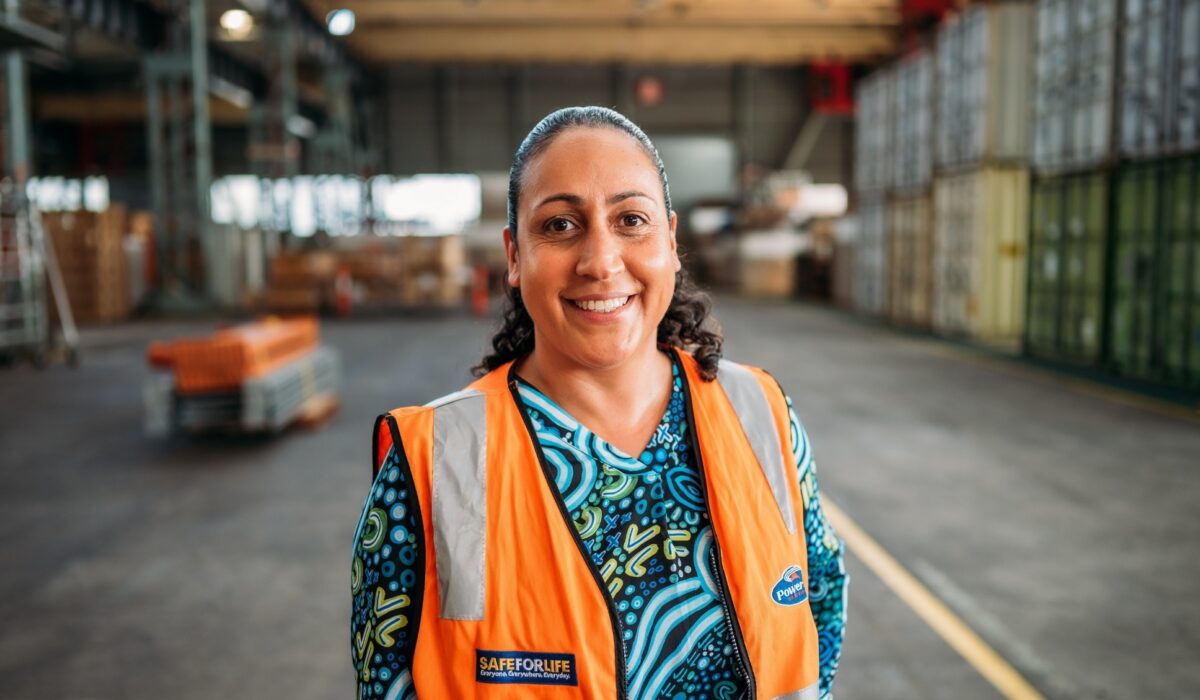
Image Credit: Powerlink Queensland
Related Posts
- Why clear job descriptions matter for gender equity – and how to write them
- This ‘tick’ can help make your organisation more attractive to candidates
- Every Australian employer has new duties under the Sex Discrimination Act – here’s what you need to know
- How to elevate diversity, equity, and inclusion work in your organisation