

It’s no secret that Australia still has a long way to go when it comes to gender equality in the workplace, especially when it comes to women in leadership. But how does the NFP sector stack up, compared with the rest of the economy?
There it is, gleaming at the top of your screen: your dream job, a high-level, well-paying position in your field. Are you qualified enough? Should you apply?
New research shows that talented women are more likely to shy away from applying for job opportunities, particularly more advanced, higher-paying positions, because they’re concerned they aren’t qualified enough, whereas men don’t seem to worry about their skills matching the specific job requirements as much,
Here are three key things that NFP organisations can do to draw more, talented women to apply.
“Trust is built in drops and lost in buckets.”
These are the words of Didier Elzinga, CEO of Melbourne-based software firm Culture Amp, reflecting on his experience of navigating a difficult transition. Making staff layoffs can be a shock for any company, but the impact can be more profound in highly collaborative environments like the company Elzinga had built.
Here, Elzinga dispels some of the myths surrounding staff layoffs and shares his learnings on managing change, dealing with fear and more.
If 2024 isn’t the year that “AI will change everything”, what will this year hold when it comes to people, culture and work in Australia’s NFP sector?
Here’s a look at the top 5 trends the EthicalJobs.com.au team sees shaping recruitment, HR and P&C leaders and teams at Australian not-for-profit organisations over 2024:
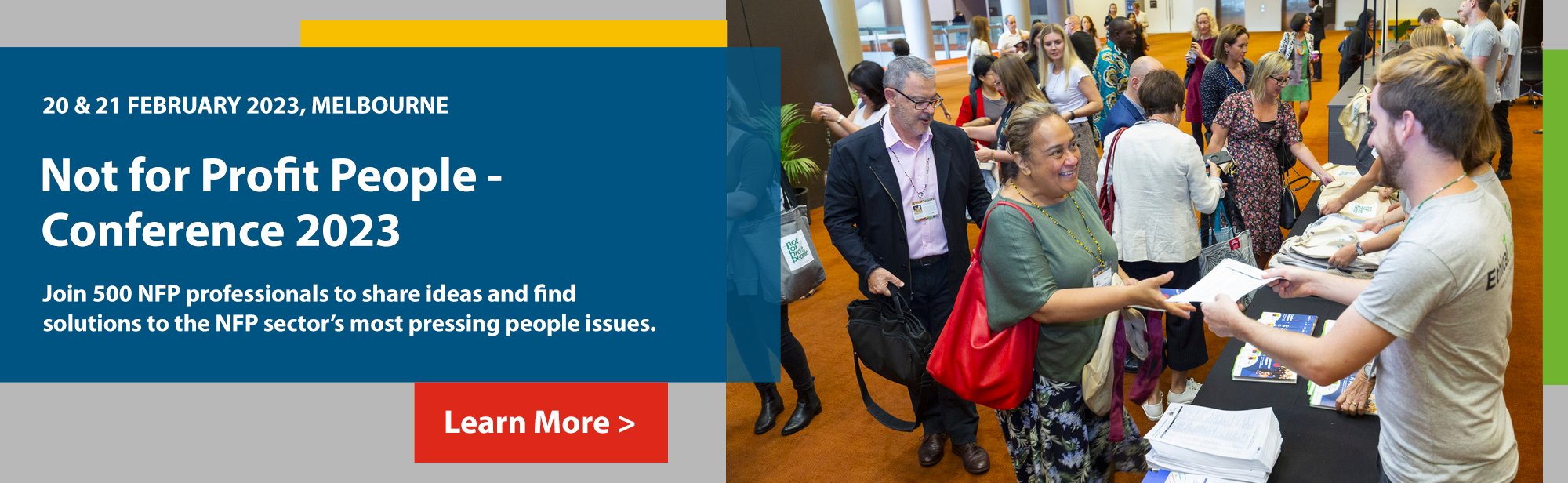
It’s hard to believe 2023 is almost at an end already! We hope that the ideas we’ve brought you through the Not-For-Profit People Blog – and our NFP People Conference back in February, if you were able to attend – have been able to make a positive impact for you, your team and your organisation’s staff and volunteers. To wrap up the year, here are the ten posts you enjoyed the most in 2023.
While the ‘war for talent’ is a terrible metaphor, in a time of record-low unemployment almost every NFP organisation is looking hard for ways to make themselves more attractive to the best candidates.
And with more than 10 percent of Australians identifying as LGBTIQ, a June 2023 survey of 5,474 people who identify as LGBTIQ across Australia and 12 other countries found that one-third were looking to move to a more LGBTIQ-inclusive employer.
One tool that can help you to attract more LGBTIQ candidates and volunteers to your organisation – and better retain your existing LGBTIQ employees and volunteers too – is the ‘Rainbow Tick’.
Most NFP board members know that their most important responsibility is to make sure their not-for-profit’s leader has the support and tools they need to make the organisation thrive. Despite this, almost half of all surveyed NFP CEOs saying that they didn’t get a proper onboarding when they started their jobs.
But given that NFP boards are made up of volunteers it’s understandable that many organisations struggle in this area. So here are five recommendations to give a new leader the best start at possible at your NFP.
Fundamentally, an inclusive climate is a diverse environment within an organisation that values the contribution of all employees. It is a workplace climate where people with different beliefs, perceptions and observable characteristics are able to work effectively with others, feel valued, and have strong feelings of belonging within that organisational context.
This begs the question: How does an organisation create an inclusive workplace?
They say feedback is the breakfast of champions. But getting and actioning useful feedback from employees or volunteers isn’t always easy. One way to do this is the often over-looked, sometimes criticised, exit interview.
So if your organisation has been neglecting to do exit interviews – or if you’d just like to improve the way you do them – here are six steps to help do them well.
When meetings are run well, they not only foster better decisions but also leave attendees feeling energised and motivated to carry the momentum forward independently. Here are some valuable tips on how to shift your thinking around meetings and time management to make the most out of your organisation’s productivity.